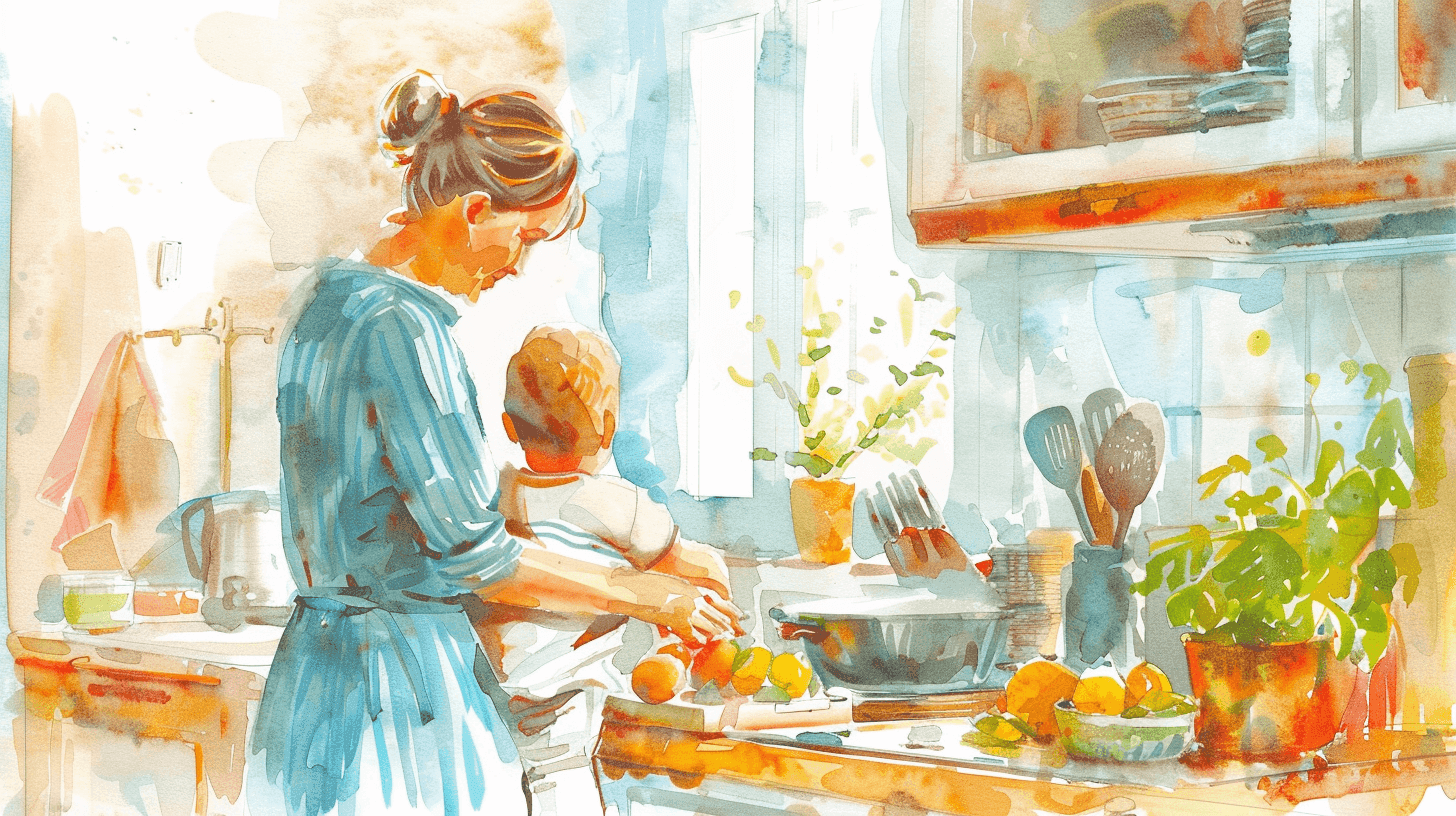
The doorbell rings at 2 p.m. She's been up since 4, the baby finally fell asleep on her chest twenty minutes ago, and she hasn't showered in two days. She shifts him carefully, gets to the door, and there you are, holding flowers, so excited to meet him. She smiles and says come in. Then she spends the next two hours making you coffee, apologizing for the house, and handing the baby back and forth, and when you leave she sits on the kitchen floor and cries.
You didn't do anything wrong. You came because you love her. But most of us were never taught what a new mom actually needs, because the people who used to teach it, and do it, aren't around anymore. I'm a perinatal psychologist and a mom, and this post is for the people who love a new mom and want to help in a way that really lands.
The village we lost
For most of human history, a new mom wasn't expected to recover on her own. Her mom, aunts, sisters, and neighbors moved in around her. Many cultures still have a traditional rest period after birth, often around 40 days, when other people cook, clean, and hold the baby so she can heal, feed, and sleep.
Now, a lot of moms come home from the hospital to an empty house. Family lives in another state. Friends work. Her partner may get a couple of weeks off, or none. Everyone means well, and everyone assumes someone else is helping.
Her body didn't get the memo that the village is gone. She still needs what new moms have always needed: rest, food, someone to hold the baby, and people who notice how she is doing. The good news is that you can be part of that village, even if you live far away and even if you've never done this before.
How to really support new moms: help, not hosting
A visit should make her day easier. If she ends up taking care of you, the visit cost her something.
- Offer something specific. "Let me know if you need anything" puts the work back on her, and most new moms won't ask. Try "I'm bringing dinner Tuesday. Any foods you hate?" or "Can I come Saturday morning and hold the baby while you nap?"
- Bring food. Freezer meals she can reheat, groceries (ask what she likes first), easy snacks she can eat with one hand, or a gift card for delivery. Food is almost always the right answer.
- Do a chore without making a thing of it. Empty the dishwasher. Fold the laundry that's on the couch. Take out the trash. Walk the dog. Don't ask where everything goes. Just do what you can see.
- Hold the baby so she can do something for herself. Eat with both hands, shower, sleep, or just sit. Holding the baby is only help if it frees her up. Holding the baby while she does your dishes is not.
- Show up later, too. The meals and visits pour in during the first two weeks and then stop. By two or three months, the help is gone and the exhaustion has piled up. That's often when she needs you most. Put a reminder on your calendar to check in then.
How to visit new parents
If you're planning a visit, a few things make a big difference.
Before you go
- Text first and ask if now is a good time. She may be feeding, sleeping, or just not up for company. Make it easy for her to say no.
- Keep it short. Plan for 30 minutes to an hour unless she asks you to stay longer.
- Ask what would help most. "Can I bring food, do dishes, or hold the baby while you shower?"
- Stay home if you're sick. Even a mild cold. Newborns don't handle illness the way adults do.
While you're there
| Do | Don't |
|---|---|
| Wash your hands as soon as you walk in | Pick up the baby without asking |
| Offer specific help, then do it | Expect a snack, a tour, or a clean house |
| Hold the baby so she can eat or shower | Hold the baby and hand him back for every diaper |
| Ask how she's really doing, and listen | Give advice she didn't ask for |
| Respect how they're doing things | Compare it to "how we did it" |
| Notice when she's tired and head out | Overstay |
Gifts that actually help
Meals, groceries, a cleaning service, a few hours of babysitting for older siblings, coffee, comfortable pajamas for her, and postpartum care supplies. A gift for her, not just the baby, tells her she matters too.
Supporting new moms when you're family
Grandparents and close family have a special role, and sometimes a tricky one. You may have strong opinions about how babies should be fed, held, or put to sleep. Advice on safe sleep and feeding has changed a lot over the years, and what was standard when you had babies may not be now. The most helpful thing you can do is support the choices she and her partner are making, and save the advice for when she asks.
If she's breastfeeding, support that by doing everything else. If she's formula feeding, support that just as much. Your job is to take care of her so she can take care of the baby.
If you're her partner, you're the center of her village. Take night shifts so she gets one real stretch of sleep. Handle visitors and say no for her when she's had enough. Make sure she gets one hour a day that is hers to recharge, a nap, a walk, a shower, with nobody needing anything from her. Here is more for partners on what helps.
Notice how she's really doing
The people who love a new mom are often the first to see that something is off. The baby blues, with tears and mood swings, are common in the first two weeks and pass on their own. But about one in five moms develop postpartum depression, and many also struggle with postpartum anxiety. Many look completely fine from the outside.
Pay attention if, beyond the first couple of weeks, she:
- Seems flat, hopeless, or not like herself
- Can't sleep even when the baby is asleep and someone else is on duty
- Is constantly worried, on edge, or checking on the baby over and over
- Says she's a bad mom, or that the baby would be better off without her
- Pulls away from people she usually loves
If you see these, say something kind and direct: "You seem like you're having a really hard time. I love you, and I think it would help to talk to someone." Offer to watch the baby while she makes the call or goes to the appointment. Here are the signs of postpartum depression, and why the early months are so much harder than people expect.
If she ever talks about harming herself, or you're worried she can't keep herself or the baby safe, call 911 or take her to the nearest emergency room. You can call or text 988 any time, and the National Maternal Mental Health Hotline is open 24/7 at 1-833-852-6262. Postpartum Support International's HelpLine, 1-800-944-4773, helps family members too.
Rebuilding the village
We can't go back to a world where family lives down the street and everyone stops to care for a new mom for weeks. But a village doesn't have to be big. It can be two friends, a neighbor, a sister on FaceTime, and a group chat that takes turns bringing dinner. It can be you.
You don't need to know exactly what to do. Show up, bring food, do the dishes, hold the baby so she can sleep, and keep checking on her after everyone else has moved on.
Working with me
I'm a licensed clinical psychologist, a certified perinatal mental health specialist, and I see a lot of moms who are struggling quietly while everyone around them thinks they're fine. If someone you love is having a hard time, you can share this with her, and if she wants, her partner is welcome to join a session as part of her therapy. I see moms in Austin or on video, and babies are always welcome in my office.
You don't have to be "bad enough" to benefit from support. Many of the moms I work with aren't clinically depressed at all. They're dealing with the everyday stress of becoming a mom, and therapy helps with that just as much as it helps with depression or anxiety.
The first step is a free 15-minute call. Tell me what has been going on, and I will tell you honestly what I think would help.
Frequently asked questions
- What is the best way to help a friend who just had a baby?
- Offer something specific instead of saying "let me know if you need anything." Bring dinner on a set day, do a chore you can see, or hold the baby so she can shower or sleep. Then check in again at two or three months, when most of the help has stopped.
- How long should I stay when visiting a newborn?
- Plan for 30 minutes to an hour unless she asks you to stay longer. Text first to ask if it's a good time, stay home if you're sick, and head out when she looks tired.
- What should I bring when visiting new parents?
- Food is almost always the right answer: freezer meals, groceries, one-handed snacks, or a delivery gift card. Practical help like doing dishes or laundry is just as good. A gift for her, like comfortable pajamas or postpartum care supplies, tells her she matters too.
- How can grandparents support a new mom?
- Take care of her so she can take care of the baby. Cook, clean, and hold the baby so she can rest. Support the choices she and her partner are making about feeding and sleep, since a lot of baby advice has changed, and save advice for when she asks.
- How do I know if a new mom needs more than help with chores?
- If, beyond the first couple of weeks, she seems flat or hopeless, can't sleep even when she can, is constantly anxious, calls herself a bad mom, or pulls away from people, she may have postpartum depression or anxiety. Tell her kindly that you're worried and offer to watch the baby while she gets help. If she talks about harming herself, call 911.
- Why do new moms need so much help?
- Because for most of history they had it. Many cultures still have a traditional rest period after birth when others cook, clean, and care for the baby. Today many moms come home to an empty house, but their bodies still need rest, food, and people who notice how they're doing.

Dr. Jana Rundle
Licensed Clinical Psychologist