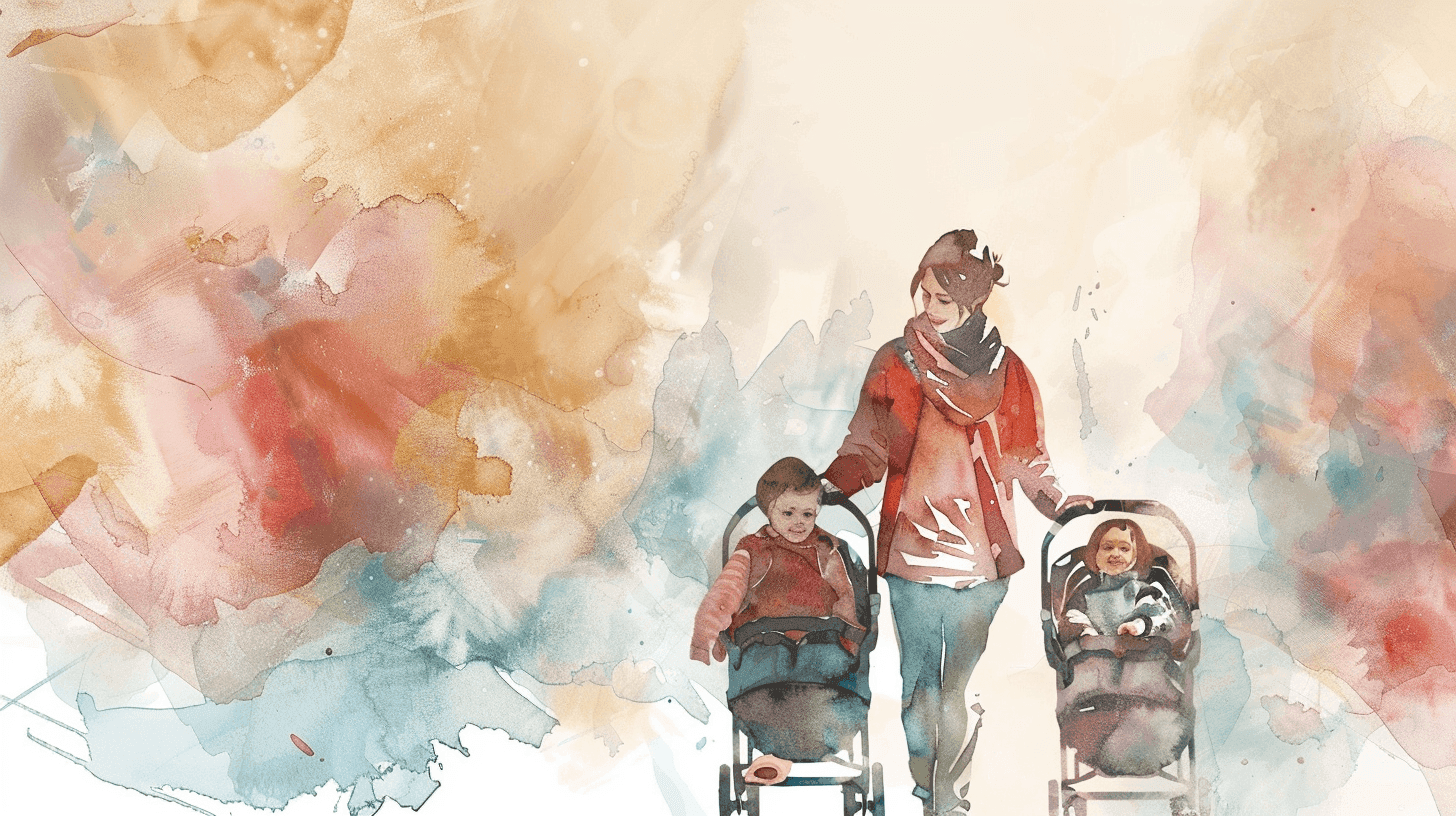
It's 7 PM. The baby has been attached to your body for what feels like the entire day: nursing, being held, sleeping on your chest. Your toddler has spent the afternoon climbing on you, pulling at your clothes, sitting on your lap. And then your partner walks in, leans in for a hug, and something inside you snaps.
You recoil. You love them, and the hug is fine. But if one more person touches you, you might actually scream.
This is what moms mean when they say they're "touched out." I hear it in my office all the time, usually said quietly, with a lot of guilt attached.
If you've felt this, the desperate need for physical space, the visceral reaction to being touched even by people you love, you're not alone, and there's a real reason this happens.
What "touched out" actually means
Feeling touched out means your nervous system has hit its limit for physical contact. It's sensory overload specific to touch. Your capacity for touch is used up, and then someone asks for more.
Signs you might be touched out:
- Feeling irritable or angry when someone touches you
- Physically recoiling from contact, even gentle contact
- Craving alone time in a visceral, desperate way
- Feeling like you're crawling out of your skin
- Snapping at your partner for normal affection
- Feeling guilty because you know your reaction isn't "logical"
- Counting down to bedtime so you can have your body to yourself
- Hiding in the bathroom just for a few minutes of not being touched
If you read that list nodding, none of it means something is wrong with you.
Why moms get touched out: the sensory overload behind it
Your nervous system has limited capacity. That capacity is biological. When you're constantly receiving sensory input (touch, sound, visual stimulation), your nervous system has to process all of it. At a certain point, it becomes overwhelmed.
When you're overstimulated, your body shifts into a protective mode. The sympathetic nervous system, the same system behind fight or flight, turns up. That recoil you feel when your partner reaches for you is your nervous system saying it can't process any more input right now.
For moms, this overload happens easily because:
- Babies and young children need constant physical contact. Nursing, carrying, comforting, all day and often all night.
- You can't opt out of most of this touch. When your baby needs to be held, you don't have a choice. That lack of choice makes the depletion worse.
- Sleep deprivation lowers your threshold. Your nervous system can handle less when you're exhausted.
- You're processing other stimulation too. Noise, visual clutter, the mental load. It all adds up.
- Your body may not feel like yours right now. Between pregnancy, birth, breastfeeding, and being constantly needed, having your body to yourself can feel like a distant memory.
Feeling touched out while breastfeeding
If nursing is when the crawling-skin feeling peaks, you're not imagining it. Breastfeeding can mean hours of skin-to-skin contact a day, on the baby's schedule rather than yours, and often while someone else also wants your lap, your hand, or your hug. By evening, your sensory system is simply full. Feeling touched out while breastfeeding means your nervous system is getting more contact than it can process. Your bond with your baby is fine.
A few things help specifically here:
- Make the feed itself lower-stimulation: dim light, a quiet room, and no one else on your body while you nurse.
- Ask your partner to take every transfer and burp, so feeds have an end point where you get a break.
- Change the scenery for one feed a day, so the sensation isn't layered onto the same couch and the same posture.
- Tell your partner plainly that after the last feed, you need your body to belong to you for a while.
If you're weighing whether to keep nursing partly because of this feeling, that's a real factor worth taking seriously. That's a choice only you can make. It's normal to have complex feelings about nursing, and there is no "right answer" no matter how hard you look for one. It's okay to step away from nursing if it's impacting your mental health. Fed is best.
Why this feels so awful
What makes being touched out particularly hard is the guilt that comes with it.
You might think:
- "I should want to be affectionate with my partner."
- "I'm rejecting my baby when I don't want to hold them."
- "A good mom wouldn't feel like this."
- "Something is wrong with me."
Being touched out is a capacity issue. You can love your kids and your partner and still need everyone off your body for a while.
What helps when you're touched out
1. Name it without shame
Tell your partner: "I'm touched out right now. My nervous system is overloaded, and it has nothing to do with you." You're giving them information. When your partner understands what's happening, they can take it less personally and help you get the space you need.
2. Create touch-free windows
Build in time, ahead of time, when no one touches you. What I recommend to almost every mom I see is one hour a day that is yours, to recharge with nobody needing anything from you. For a touched-out mom, that hour matters even more. It might look like:
- Time after the kids are in bed where you're alone before engaging with your partner
- A morning routine where your partner handles the kids while you shower and get dressed without anyone touching you
- Trading off with your partner so you each get chunks of time physically alone
3. Use physical barriers when you can
If you're nursing, try different positions that give you more space. Use a pillow between you and a toddler who wants to sit on your lap. Put the baby in a carrier so they're contained rather than climbing all over you.
4. Turn down the other sensory input
Being touched out is usually part of broader overstimulation. Notice if you can reduce:
- Noise (turn off the TV, use headphones)
- Visual clutter (even clearing one surface can help)
- Decision-making demands
- Anything else that's adding stimulation you don't need
5. Calm your nervous system
When you're in a touched-out state, your nervous system needs calming input:
- Cold water on your face or wrists can slow your heart rate and settle your system
- Deep pressure, which often feels better than light touch, like a weighted blanket or wrapping your own arms tightly around yourself
- Slow exhales, with the exhale longer than the inhale
- Solo movement, like a walk alone or stretching, anything that lets your body move without anyone touching you
6. Talk with your partner before you hit the wall
Don't wait until you're already touched out and snapping. Have a conversation when you're both calm:
- Explain what being touched out feels like for you
- Create a signal you can use when you're approaching your limit
- Talk about kinds of connection that aren't physical touch (talking, sitting near each other, watching something together)
- Say clearly that this isn't about them or your attraction to them
What your partner needs to understand
Partners: being touched out is about capacity. She isn't rejecting you.
When your partner says she can't handle being touched right now, the best response is: "I understand. What do you need?" Skip the guilt-tripping and sulking, and try not to take it personally.
Physical touch may be how you feel most loved, and her nervous system has limits. Both are true.
Ways to stay connected when your partner is touched out:
- Sit near her without touching
- Make eye contact and talk
- Do something thoughtful (make her tea, handle a task she's been dreading)
- Give her genuine alone time without making her feel guilty
- Check in later: "Do you have any capacity for a hug now, or do you need more time?"
If your partner needs more on this, I wrote about what to do when your partner doesn't understand what postpartum is like.
When being touched out might be something more
Occasional touched-out feelings are normal for parents of young children. But sometimes, aversion to touch is a sign of something that needs more attention:
- Postpartum depression or anxiety can include sensory sensitivity and irritability. Here are the symptoms that are easy to miss.
- Postpartum rage often shows up as intense reactions to ordinary things. I wrote about postpartum rage and what helps.
- Past trauma can be stirred up by the loss of control over your own body that comes with caring for a baby.
- Nursing aversion is a strong wave of agitation or even disgust during nursing itself. It's different from D-MER (dysphoric milk ejection reflex), a sudden drop in mood right as milk lets down. Both are real, and both are worth bringing to your lactation consultant.
If you're feeling touched out most of the time, if your reactions feel extreme, or if this is spilling into your relationships and how you feel day to day, it's worth talking to someone who understands perinatal mental health.
Permission to not want to be touched
I want to give you explicit permission for something that might feel taboo:
You are allowed to not want to be touched.
Even by your baby. Even by your partner. Even by people you love. Your body is still yours. Being a mom doesn't require you to become an unlimited resource for everyone else's physical needs with nothing left for yourself.
Setting boundaries around touch leaves you room for the touch you want: the cuddles, the nursing sessions that feel close, the hugs from your partner that feel good instead of like one more demand.
This is an overwhelmed nervous system asking for room, and you can give it that room.
If you want to work on this on your own
I made a self-paced course, Postpartum Wellness Foundations, for moms who want to feel steadier day to day. It covers what's normal and what's worth getting checked after a baby, how to quiet perfectionism and the inner critic with self-compassion, quick ways to calm an overwhelmed nervous system, and how to build the support you actually need, including how to talk with your partner about it. It comes with printable workbooks and short guided meditations, and you can go at your own pace. You can watch the first lesson free before you decide.
Working with me
I'm a licensed clinical psychologist, a certified perinatal mental health specialist, and the overwhelm, irritability, and guilt that come with being touched out are a regular part of my work with new moms. Together we sort out how much is a depleted nervous system that needs more support, and how much might be depression, anxiety, or rage that deserves treatment of its own. I see moms in Austin or on video, and babies are always welcome in my office.
You don't have to be "bad enough" to benefit from support. Many of the moms I work with aren't clinically depressed at all. They're dealing with the everyday stress of becoming a mom, and therapy helps with that just as much as it helps with depression or anxiety.
The first step is a free 15-minute call. Tell me what has been going on, and I will tell you honestly what I think would help.
Frequently asked questions
- What does touched out mean?
- Feeling touched out means your nervous system has hit its limit for physical contact. After hours of nursing, holding, and being climbed on, even gentle touch from people you love can make you want to recoil. It's a form of sensory overload, not a sign that you love your family any less.
- Is it normal to feel touched out as a mom?
- Yes. Occasional touched-out feelings are very common for parents of babies and young children, especially with sleep loss and breastfeeding. It becomes worth talking to someone when you feel it most of the time, your reactions feel extreme, or it's spilling into your relationships and mood.
- Why do I feel touched out while breastfeeding?
- Breastfeeding can mean hours of skin-to-skin contact a day on the baby's schedule, often while someone else also wants your lap or a hug. By evening your sensory system is full. It says nothing about your bond with your baby or your commitment to nursing.
- How do I stop feeling touched out?
- Name it to your partner without shame, build touch-free time into the day (I recommend one hour a day that is yours), lower other sensory input like noise and clutter, and use calming input like cold water, deep pressure, slow exhales, and moving on your own.
- How can my partner help when I'm touched out?
- Treat it as a capacity issue, not rejection. Ask what she needs, stay connected without touch by sitting near her and talking, take over tasks and transfers, give real alone time without guilt, and check in later about whether she has room for a hug.
- Can feeling touched out be a sign of postpartum depression?
- Sometimes. Postpartum depression and anxiety can include sensory sensitivity and irritability, and postpartum rage can show up as intense reactions to ordinary touch or noise. If you feel this way most of the time, talk with a perinatal mental health professional.

Dr. Jana Rundle
Licensed Clinical Psychologist