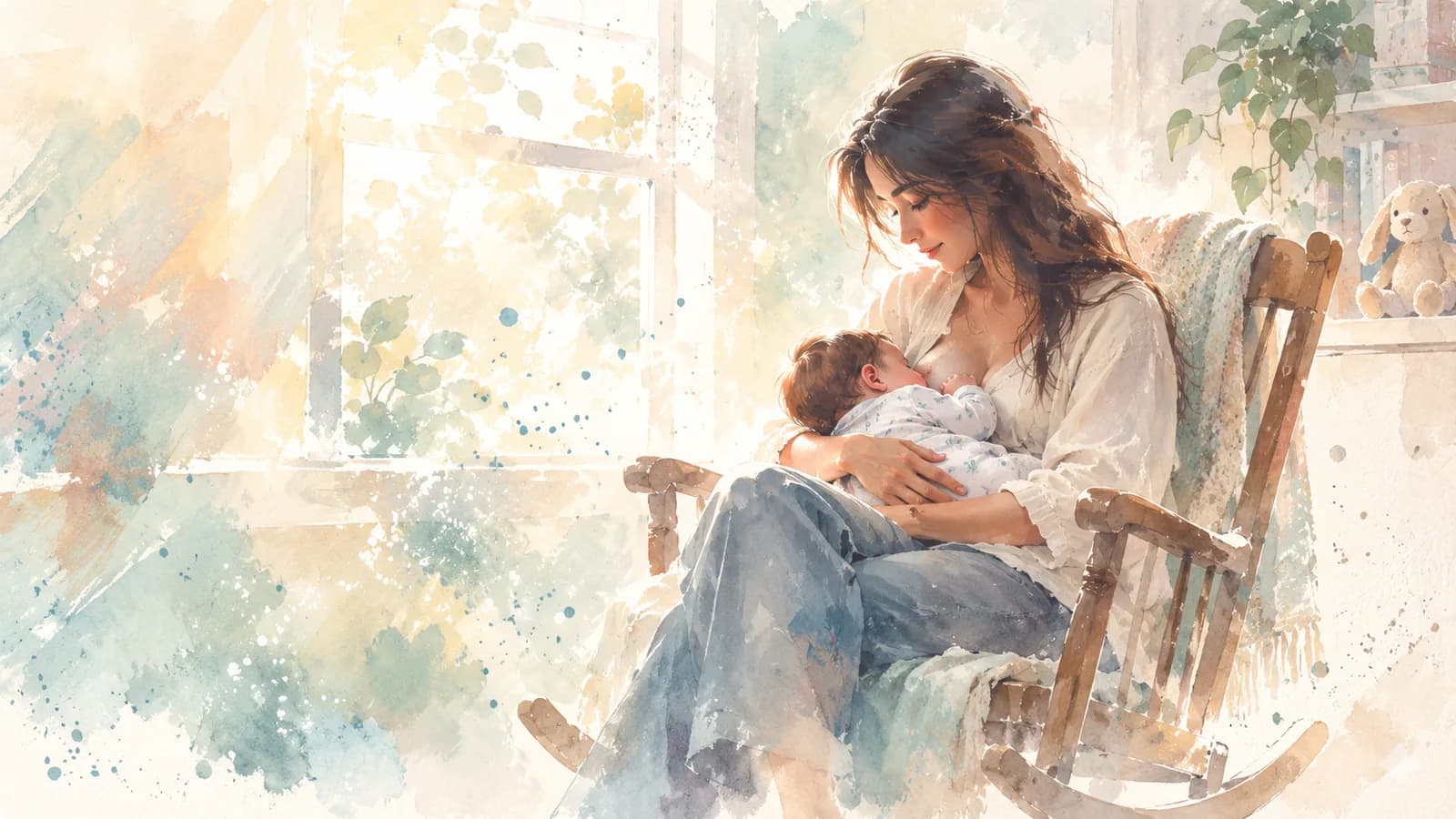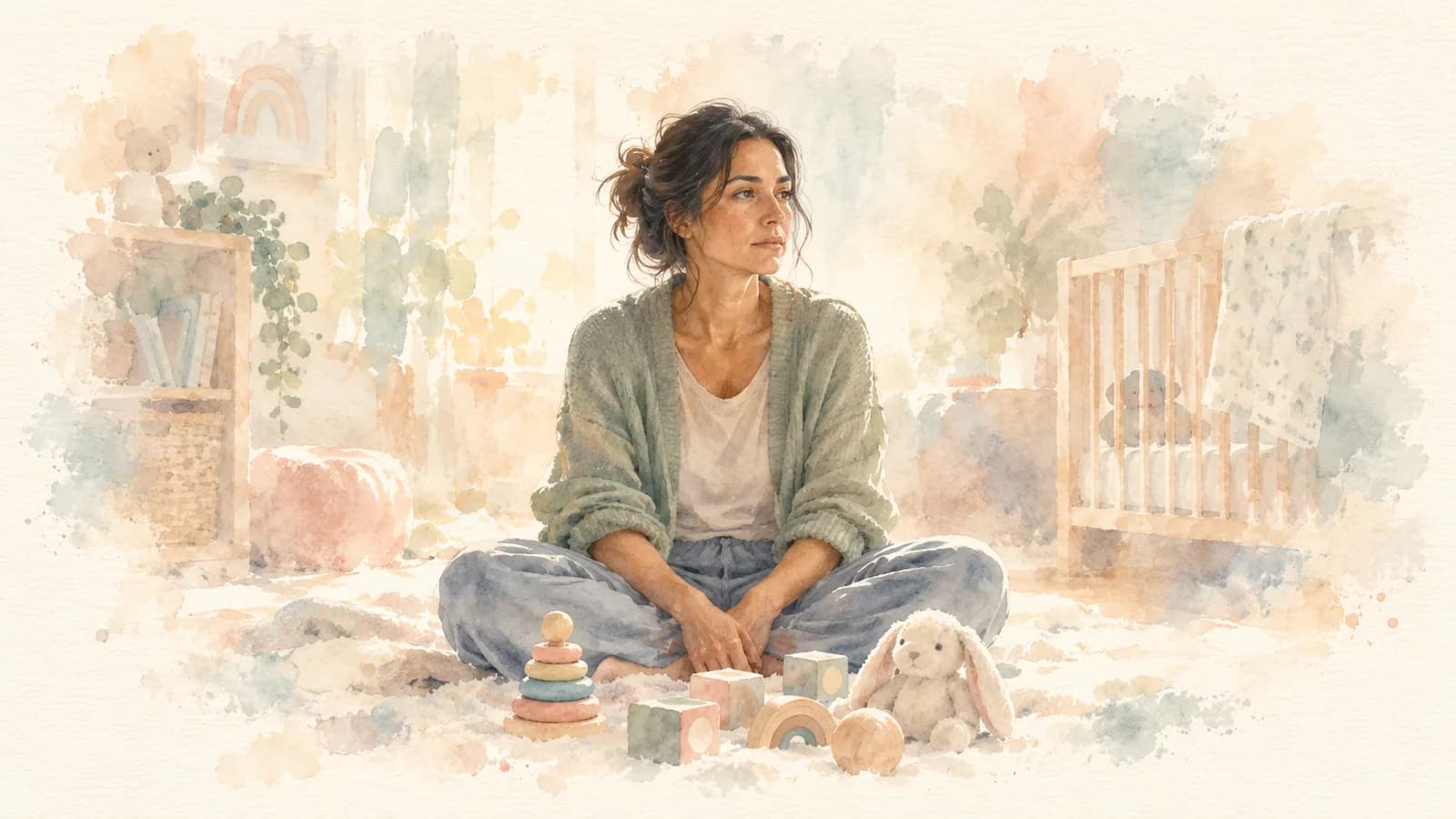
You're looking for the burp cloth and find an old concert wristband in the junk drawer instead. For a second you're back there, loud music, no diaper bag, staying out until 1 a.m. because you felt like it. Then the baby starts crying in the other room and you're standing in your kitchen in a stained shirt, wondering who that woman was and where she went. You love your baby. You also feel like someone you used to know has disappeared, and nobody seems to notice she's gone.
Moms say versions of this to me all the time, usually followed quickly by "but I'm so grateful." I hear you. As a psychologist and a mom, I want to say clearly that grieving who you were is normal, and it's one of the least talked about parts of having a baby. You can be grateful and still grieve.
The postpartum identity crisis no one warns you about
There's a word for this: matrescence. The anthropologist Dana Raphael used it in the 1970s to describe the transition into becoming a mom, and it's often compared to adolescence. Your body changes, your relationships change, your priorities change, and your sense of who you are has to reorganize around all of it.
We give teenagers years to be confused and figure themselves out. New moms are expected to do it in a few weeks, quietly, while smiling. So when you feel lost, it can seem like something is wrong with you. Really, you're in the middle of one of the biggest changes a person goes through.
A postpartum identity crisis can look like:
- Not recognizing yourself in the mirror, or in your own reactions
- Missing your old life so much it aches, then feeling guilty for missing it
- Feeling like "mom" has swallowed every other part of you
- Not knowing what you like anymore, or what you'd do with a free afternoon
- Feeling far away from friends, from work, or from your partner
Grieving your pre-baby life
It helps to name what you might be grieving, because grief you don't name tends to come out in other ways.
- Your body. It carried and fed a baby, and it may not feel like yours yet. Missing how your body looked before is allowed.
- Your freedom. Leaving the house with just your keys. Sleeping until you wake up. Deciding at 7 p.m. to see a movie. Small things you didn't know you'd miss.
- Your relationship. Long dinners and unhurried conversations with your partner may have been replaced by handoffs and logistics. You can love your partner and still miss what you had. Here is more on when your partner doesn't understand what you're going through.
- Your friendships. Friends without kids may not get why you keep canceling. Friends with older kids may have forgotten how hard this part is.
- Your work self. Whether you went back or stepped away, the professional version of you has been disrupted. Many of the high-achieving moms I see find this one especially hard, because competence used to be how they knew who they were. I wrote about going back to work after a baby here.
- Your sense of self. This is the deepest one. You used to have opinions, hobbies, and plans that had nothing to do with a baby, and right now you can't find them.
You can grieve and love your baby at the same time. Missing your freedom doesn't mean you don't love your baby. Mourning how things were with your partner doesn't mean your relationship is failing. Feeling lost doesn't make you a bad mom. When you don't let yourself grieve, it tends to come out as resentment, numbness, or irritability.
Why having a baby brings old things back up
This is the part I spend a lot of time on in therapy. Becoming a mom changes your future, and it also stirs up your past.
Holding your own baby can bring back how you were cared for as a child, sometimes in ways you didn't see coming. A mom with a critical parent may hear that voice in her own head every time the baby cries. A mom who grew up taking care of everyone else may find it almost impossible to let anyone take care of her. Old losses can resurface. So can patterns you swore you'd never repeat.
That's part of why identity feels so shaky right now. On top of adding a new role, you're sorting out which parts of where you came from you want to carry forward and which you want to leave behind. When you understand the patterns you inherited, you get to choose new ones, and that choice is a big part of who you become.
Identity after baby: what integration looks like
You can't get back to exactly who you were, and most moms wouldn't fully want to. The goal is to bring the parts of you that matter into the life you have now, and to make room for who you're becoming.
- Name what you miss. Write it down. Saturday mornings, running, your favorite jeans, being known for something other than being someone's mom. You can't grieve something you won't admit to.
- Let yourself feel it. Cry if you need to. Be angry if you're angry. You don't have to fix these feelings.
- Pick what to bring forward. Which parts of your old self are worth protecting? Maybe it's a creative practice, one friendship, or exercise. Choose on purpose, so things don't slip away by default.
- Notice what's new. Most moms find something has grown, too: a fierceness, a sharper sense of what matters, a patience they didn't have. You're different now, and some of that is good.
- Find people who let you be honest. A moms' group, a friend in the same stage, a therapist. You need at least one place where "I miss my old life" doesn't get met with "but aren't you grateful?" Here are support groups in Austin.
- Take one hour a day that is yours. Use it for something you want: a walk, a nap, a book, a shower that isn't rushed. It's one of the most direct ways to remember you're still a person with your own needs.
When an identity crisis is something more
Some disorientation is normal for months. But sometimes feeling lost is a sign of postpartum depression or anxiety. Reach out to a perinatal mental health specialist if:
- You feel empty, flat, or numb most days for more than a couple of weeks
- You've lost interest in almost everything, including things that used to matter
- You feel like you're watching your life from outside your body
- You're anxious nearly all the time about whether you're good enough
- Basic things like eating, showering, or getting out of bed feel impossible
Postpartum depression doesn't always look like sadness, and a lost sense of self can be one of the ways it shows up.
How therapy helps
In therapy, I use interpersonal therapy for the role change itself and the strain it puts on your relationships, CBT for practical tools when your thoughts about yourself turn harsh, and psychodynamic work for the older patterns that this stage tends to wake up. Together they help you grieve what changed and build a sense of self that fits your life now. Most moms I work with come weekly for the first 8 to 12 weeks, then every other week or monthly.
If you want to work on this on your own
A lot of the work of finding yourself again starts with being kinder to yourself about how hard this is.
I made a self-paced course, Postpartum Wellness Foundations, for moms who want to feel steadier day to day. It covers what's normal and what's worth getting checked after a baby, how to quiet perfectionism and the inner critic with self-compassion, quick ways to calm an overwhelmed nervous system, and how to build the support you actually need, including how to talk with your partner about it. It comes with printable workbooks and short guided meditations, and you can go at your own pace. You can watch the first lesson free before you decide.
Working with me
I'm a licensed clinical psychologist, a certified perinatal mental health specialist, and helping moms find themselves again after a baby is a big part of my work. We make room for the grief, look at what this stage is stirring up from your past, and build a version of you that fits the life you have now. I see moms in Austin or on video, and babies are always welcome in my office.
You don't have to be "bad enough" to benefit from support. Many of the moms I work with aren't clinically depressed at all. They're dealing with the everyday stress of becoming a mom, and therapy helps with that just as much as it helps with depression or anxiety.
The first step is a free 15-minute call. Tell me what has been going on, and I will tell you honestly what I think would help.
Frequently asked questions
- Is it normal to feel like I've lost myself after having a baby?
- Yes. Feeling like your old self has disappeared is one of the most common and least talked about parts of becoming a mom. Your body, relationships, work, and priorities all shift at once, and your sense of who you are has to reorganize around that.
- What is matrescence?
- Matrescence is a word for the transition into becoming a mom, first used by the anthropologist Dana Raphael in the 1970s. It's often compared to adolescence because it changes your body, relationships, priorities, and identity all at once.
- Does grieving my old life mean I don't love my baby?
- No. Grief and love can sit side by side. Missing your freedom, your body, or your old routines says you've lost real things, not that you love your baby any less. Grief that isn't allowed often comes out as resentment or numbness instead.
- Why does having a baby bring up my own childhood?
- Caring for your own baby often stirs up how you were cared for, along with old losses and patterns you hoped not to repeat. Understanding those patterns, which psychodynamic therapy helps with, makes it easier to choose new ones.
- When is a postpartum identity crisis a sign of depression?
- If you feel empty or numb most days for more than a couple of weeks, have lost interest in almost everything, feel detached from your own life, or can't manage basic daily tasks, talk with your OB or a perinatal mental health specialist. Those can be signs of postpartum depression or anxiety, which are very treatable.

Dr. Jana Rundle
Licensed Clinical Psychologist