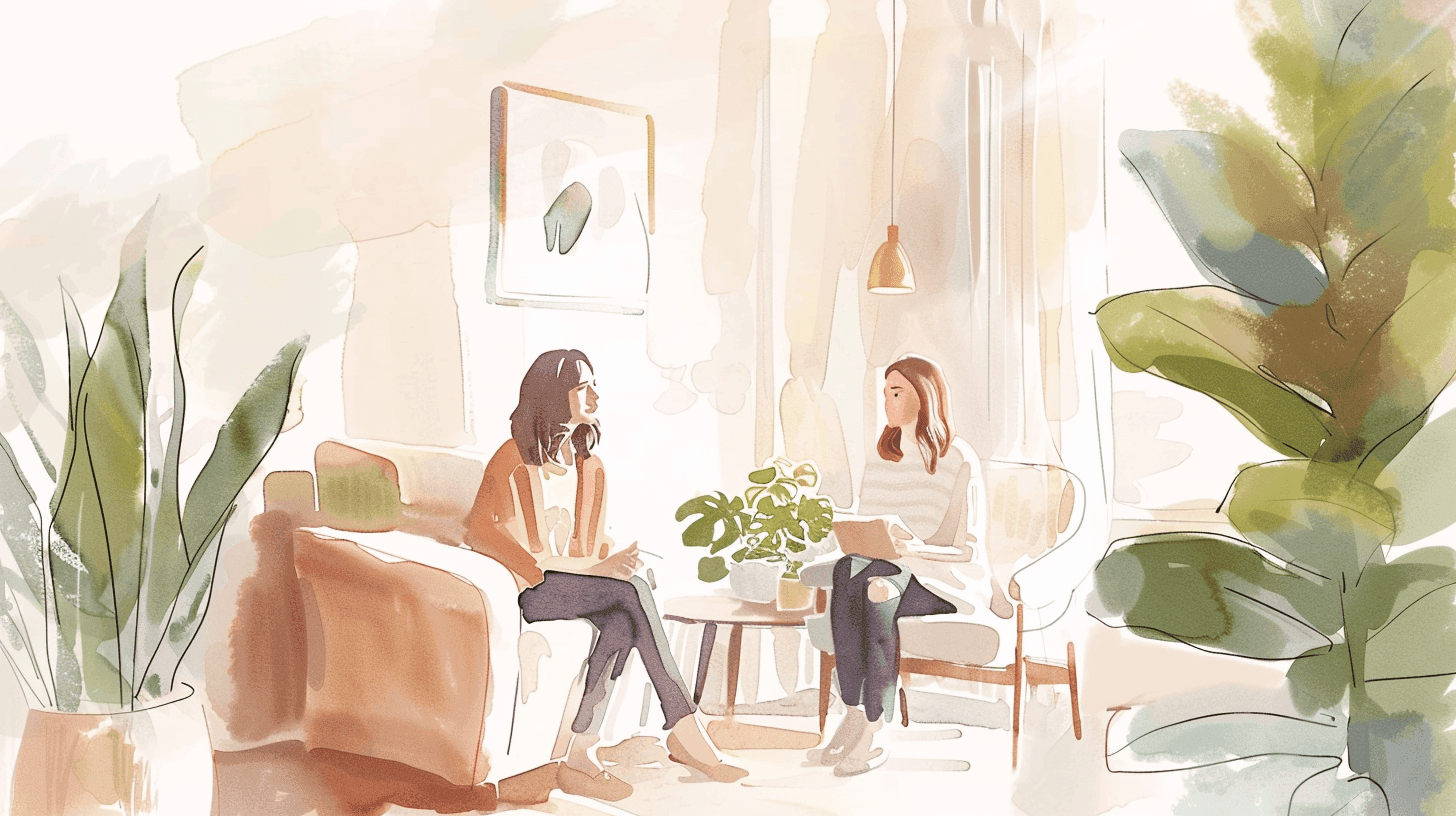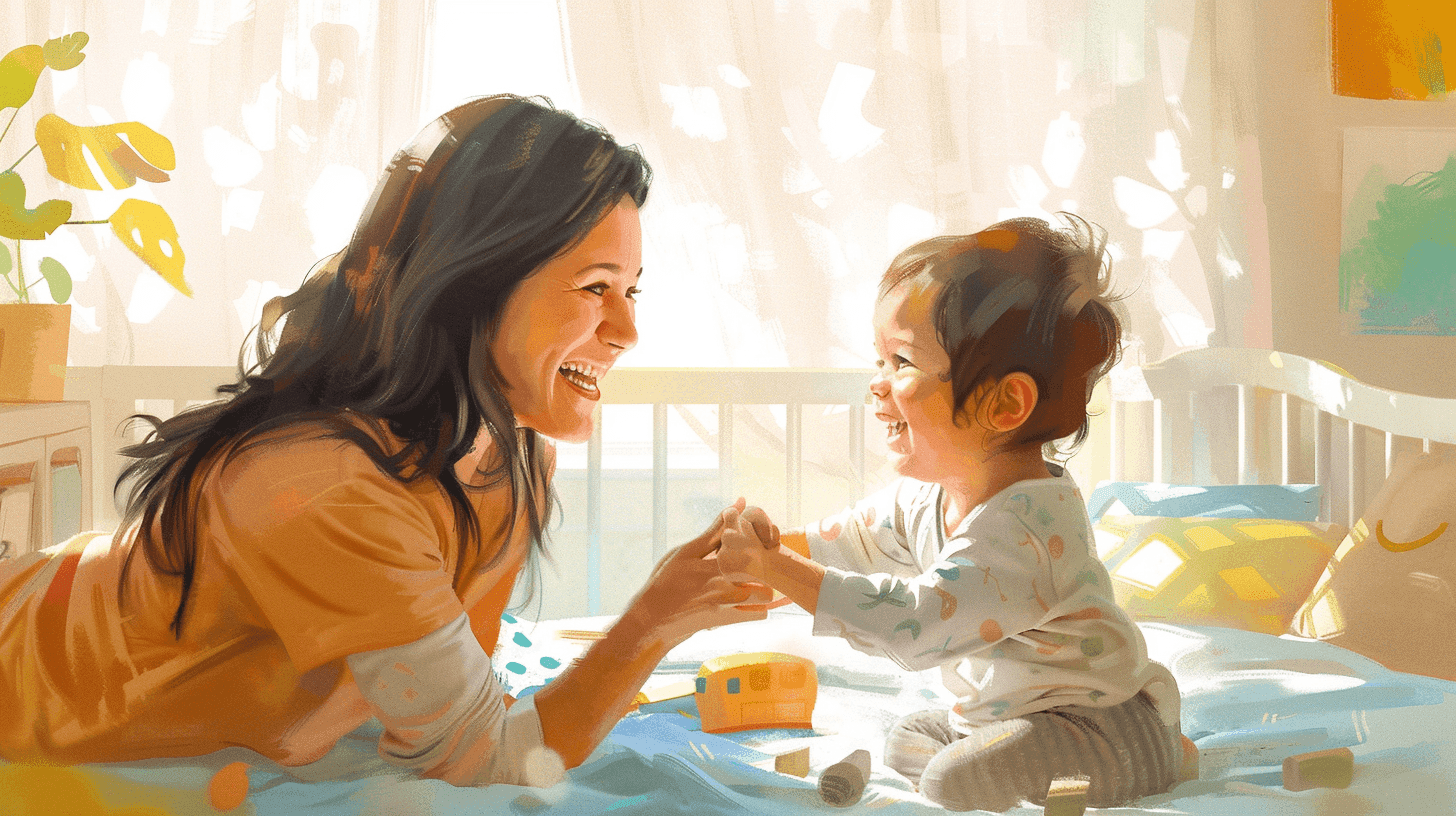
Your friend texts a photo of her baby in a tiny pumpkin costume with "best year of my life!!" underneath. You're on the couch in yesterday's leggings, the baby has been fussing for an hour, and you haven't felt joy in what feels like weeks. You type "so cute!!" and put the phone face down. Then the familiar thought shows up: everyone else is loving this, so what is wrong with me?
I hear some version of that in my office all the time. Moms tell me they love their baby and they're not enjoying being a mom, and they say it like it's the worst thing a person could admit. As a psychologist and a mom, I want to tell you it's far more common than anyone lets on, and that it usually has reasons you can actually work with.
When motherhood isn't joyful: why it happens
Joy is hard to reach when you're running on almost no sleep and someone needs you every minute. Add in any of these, and joy can almost certainly disappear for a while:
- Sleep loss. Broken sleep, night after night, flattens your ability to feel good things and makes hard things feel heavier. A lot of what feels like "I'm not cut out for this" is exhaustion talking.
- Your body is still recovering. Hormones shift sharply after birth, and your body may still be healing from delivery or feeding. That affects mood and energy more than most people expect.
- Not enough support. If your partner works long hours, family is far away, or friends drifted after the baby came, you're doing this mostly alone. Isolation drains joy fast.
- You're grieving your old life. Your freedom, your work self, your body, your time. That loss is real, and it can sit right next to your love for your baby. I wrote more about grieving who you were before the baby here.
- Old things are coming back up. Having a baby can stir up how you were raised, a hard relationship with your own parents, or old losses. Sometimes the heaviness you feel now has roots that go back much further than this year.
- Postpartum depression or anxiety. About one in five moms has postpartum depression, and many have anxiety too. Not feeling joy, or not feeling much of anything, is one of the most common signs.
You still love your baby. You're also carrying a lot.
The "I should be enjoying this" trap
Most moms carry a story that good moms feel grateful and fulfilled all the time. When real life doesn't match, the gap fills with shame. And shame makes you go quiet, which keeps you stuck.
This is where a simple CBT tool helps. Notice the thought, and see what it does to you:
| The thought | What it leads to | A truer thought |
|---|---|---|
| "I should be enjoying this." | Guilt, feeling like a failure, pulling away | "This is really hard right now, and that doesn't make me a bad mom." |
| "Everyone else loves this." | Comparing, hiding how you feel | "I'm seeing their best photo. Their 3 a.m. probably looks like mine." |
| "Something is wrong with me." | Shame, not asking for help | "I'm exhausted and stretched thin. That's information about what I need." |
You don't have to believe the new thought right away. Just noticing the old one loosens it a little.
Coping with mom burnout and motherhood overwhelm
You don't have to enjoy every part of this. You don't have to love the 2 a.m. wake-ups or the blowouts or bouncing a crying baby for an hour. You're allowed to dislike parts of it and still be a good mom.
A few things that help:
- Drop the "should" when you can. When you catch "I should be...," try swapping in what's actually true right now. "I'm tired and I want to sit down" is just a feeling.
- Say it out loud to one person. Tell a friend, your partner, or another mom, "I'm not enjoying this right now." Hearing "me too" does more than you'd expect. Here are support groups in Austin if you don't have that person yet.
- Ask for specific help. "Can you take the baby from 6 to 8 on Saturday?" works better than waiting for someone to notice.
- Protect one hour a day that is yours. Nobody needing anything from you. A nap, a walk, a shower that isn't rushed, a book. That hour is how you refill enough to feel anything good at all.
- Lower the bar on the rest. The house can be messy. Dinner can be cereal. What your baby needs is you, fed and rested enough to be there.
Finding joy in motherhood again
For most moms, joy does come back. It just tends to look different than the photos. It's quieter. It's the first real laugh your baby gives you, a morning when you get to drink your coffee warm, a night out where you don't spend the whole time feeling guilty, or the relief of finally having help. Those moments show up more as sleep improves, support gets better, and anything underneath, like depression or anxiety, gets treated.
If you're waiting for joy to arrive on its own and months are going by, that's a sign to get help.
When it's more than a hard season
Reach out to a perinatal mental health specialist if:
- You've felt flat, numb, or low most days for more than two weeks
- You feel disconnected from your baby, or like you're going through the motions
- You've lost interest in things you used to care about
- You're anxious most of the day, or can't sleep even when the baby sleeps
- You feel hopeless, or like your family would be better off without you
Here are the signs of postpartum depression, and how it differs from the baby blues.
In therapy, I use CBT for the practical tools, interpersonal therapy for the role change and the relationships around you, and psychodynamic work for the older patterns this stage can stir up. When depression is part of it, medication can help too, and there are options considered compatible with breastfeeding; that's a conversation with your OB or a prescriber. Most moms I work with come weekly for the first 8 to 12 weeks and feel substantially like themselves within a few months.
If you want to work on this on your own
Much of feeling better starts with going easier on yourself about how hard this is.
I made a self-paced course, Postpartum Wellness Foundations, for moms who want to feel steadier day to day. It covers what's normal and what's worth getting checked after a baby, how to quiet perfectionism and the inner critic with self-compassion, quick ways to calm an overwhelmed nervous system, and how to build the support you actually need, including how to talk with your partner about it. It comes with printable workbooks and short guided meditations, and you can go at your own pace. You can watch the first lesson free before you decide.
Working with me
I'm a licensed clinical psychologist, a certified perinatal mental health specialist, and I see a lot of moms who love their babies and still aren't enjoying many parts of motherhood. My office is a place to say that out loud without anyone telling you to be more grateful, and to figure out what's underneath it. I see moms in Austin or on video, and babies are always welcome in my office.
You don't have to be "bad enough" to benefit from support. Many of the moms I work with aren't clinically depressed at all. They're dealing with the everyday stress of becoming a mom, and therapy helps with that just as much as it helps with depression or anxiety.
The first step is a free 15-minute call. Tell me what has been going on, and I will tell you honestly what I think would help.
Start Your Therapy Journey
Work with Dr. Jana Rundle, a licensed psychologist specializing in maternal mental health.
Specialized Postpartum Support
Get compassionate, evidence-based care tailored to your postpartum journey.
Learn About Postpartum TherapyFrequently asked questions
- Is it normal to not enjoy motherhood?
- Yes, especially in the early months. Sleep loss, physical recovery, too little support, and grieving your old life can all push joy out of reach for a while. Not enjoying this stage doesn't mean you love your baby any less or that you'll never enjoy being a mom.
- Why don't I feel happy after having a baby?
- Often it's a mix of exhaustion, hormone shifts, isolation, and the loss of your old routines and identity. Sometimes it's postpartum depression or anxiety, which affect many moms. If the flatness lasts more than two weeks, talk with your OB or a perinatal mental health specialist.
- Can not feeling joy be a sign of postpartum depression?
- Yes. Feeling flat, numb, or unable to enjoy things is one of the most common signs of postpartum depression. About one in five moms has postpartum depression, and it's very treatable with therapy, and sometimes medication.
- How do I cope with mom burnout?
- Drop the shoulds where you can, tell one person honestly how you feel, ask for specific help, lower the bar on everything that isn't essential, and protect one hour a day that is yours to recharge. If it doesn't lift, therapy can help.
- Will the joy come back?
- For most moms it does, though it often looks quieter than the photos: a first real laugh, a warm cup of coffee, a night out without guilt. It tends to return as sleep and support improve and as any depression or anxiety underneath gets treated.

Dr. Jana Rundle
Licensed Clinical Psychologist