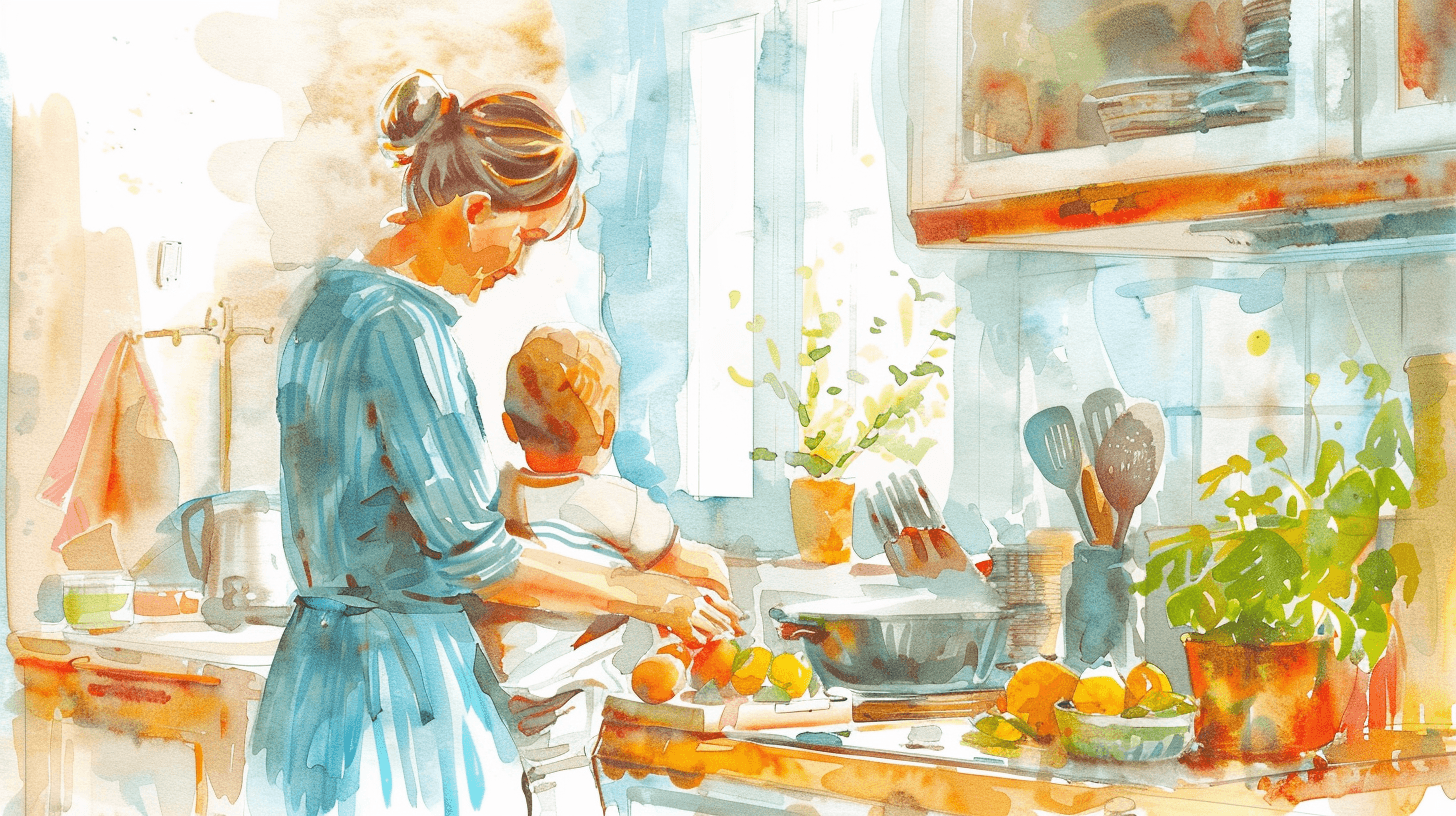
Two months in, a lot of couples I see have become roommates who hand off a baby. She is low, or furious, or somewhere far away behind her eyes. He is doing more than he has ever done and she is still the one carrying it. Each of them is sure the other does not get it, and each of them is right.
I am a perinatal psychologist in Austin, and I see this in my office every week. I also lived a version of it, with a partner who was genuinely helpful and still, for a while, did not understand. So I want to be honest about how hard this is, and clear about what actually protects a relationship through it.
The number, and the part of it that is good news
The Gottman lab followed 130 couples from before their first pregnancy through the baby's third birthday. About two-thirds of them, 67%, saw a steep drop in how satisfied they were with each other in the first three years after the baby came. Steeper and faster than any other life transition the lab had measured. That is from the Gottmans' research, and when postpartum depression is in the house, the strain is heavier still.
The other third did not decline. When the researchers looked for why, the answer was friendship. Those couples kept liking each other, kept noticing each other, and kept turning toward each other in small ways while everything else fell apart. That is something you can do on purpose, even now.
Why postpartum depression is so hard on a relationship
- One of you cannot show up the way she used to. Depression takes the energy for connection first. She has nothing left to give yet.
- The load tips. One partner carries more of the nights, the house, and the baby, and feels it. She feels guilty for not pulling her weight and too depressed to change it. Nobody says any of this out loud.
- She pulls away and you chase. Or you stop chasing, which feels like abandonment.
- Sleep is gone, and sleep is what makes patience possible.
- Intimacy stops. Pain, exhaustion, a body that feels foreign, and a depression that flattens desire. Conversations shrink to logistics.
- You are both grieving the relationship you had before, and almost nobody says that part either.
None of this means you chose the wrong person or made a mistake having a baby. Two depleted people are trying to keep a third person alive with no sleep. Of course it is hard.
The four patterns I see most
- Criticism and defense. "You never help." "I'm doing everything!" Both of you feel unseen, so you both get louder. What breaks it: say what you need. "I am drowning at night. Can we split the wakeups three and three?"
- Pursue and withdraw. He asks what is wrong, again. She needs to be left alone, and says so in a way that lands as rejection. What breaks it: she names the space and the return. "I need thirty minutes, and then I want to sit with you."
- Resentment that boils over. He does not want to burden her, so he says nothing, for weeks, and then says all of it at once. What breaks it: say it while it is still small. "I am running on empty. Can we look at who is doing what?"
- Fixing when she needs listening. She says how bad it is. He offers a plan. She feels dismissed; he feels useless. What breaks it: one question first. "Do you want me to listen, or help you solve it?" During postpartum depression the answer is usually listen. I wrote more about this gap in when your partner doesn't understand, and about the invisible side of the load in a post for partners.
One warning. Eye-rolling, sarcasm, mocking, or shutting down completely is a different category. The Gottmans found contempt to be the single strongest predictor of a relationship ending. If that is where you are, it is worth a couples therapist now, not after the depression lifts.
What protects you
These are small, and they are what the couples who stayed close actually did.
- Start soft. How a conversation begins predicts how it ends. "I feel [this] when [that]. I need [one specific thing]."
- Ask before you fix. "Listen, or solve?"
- Five to one. The Gottmans' research found stable couples had about five kind or appreciative moments for every negative one. A hand on the back, "thank you for taking bedtime," a text at 2 p.m. Deposits are cheap. Make a lot of them.
- Ten minutes with no baby talk. Coffee before she wakes, the couch after bedtime, phones face down. Not every day. Most days.
- Repair fast. You will fight. What matters is how quickly you find your way back. "I got defensive, and I'm sorry." Then move on.
About intimacy
It comes back, slowly, and usually from the outside in. Emotional closeness first, then touch with no agenda, hands, a back rub, falling asleep cuddling, and only then anything more. Low desire is a symptom of depression, and it lifts as the depression does. Pressure does the opposite. If you are the partner, the most attractive thing you can do right now is take the 5 a.m. feed.
Treat the depression first
Most of the relationship strain I see eases once the depression is treated, because a mom who can feel again can connect again. So the order matters: her treatment first, relationship work alongside or after. Partners are welcome to join a session as part of her therapy, and some of the most useful hours I have are the ones with both of you in the room. For deeper couples work, a therapist who understands the postpartum period is worth finding, and Postpartum Support International can point you to one. If you are the partner, this one is for you.
If this is where you are
I'm a licensed clinical psychologist, a certified perinatal mental health specialist, and I work with moms. We usually meet weekly for the first eight to twelve weeks, in my office in Austin or on video, and most moms feel more like themselves around the third month. The relationship usually follows.
You don't have to be "bad enough" to benefit from support. Many of the moms I work with aren't clinically depressed at all. They're dealing with the everyday stress of becoming a mom, and therapy helps with that just as much as it helps with depression or anxiety.
The first step is a free 15-minute call. Tell me what it has been like at home, and I will tell you honestly what I think would help.
Frequently asked questions
- Will we ever get back to how we were before the baby?
- No, and that is not the goal. You are different people now. What I see instead is couples who come through this knowing how to ask for things, how to repair after a fight, and how much the other one can carry. That is usually a better relationship than the one before, not a copy of it.
- How do we divide things fairly when one of us has postpartum depression?
- Fair is not fifty-fifty right now. It is each of you carrying what you actually can. The partner without depression carries more for a while, and needs support of their own so resentment does not build. As she gets better, you rebalance on purpose rather than hoping it drifts back.
- Is it normal to feel like I hate my partner right now?
- More normal than anyone admits. In the thick of no sleep and depression, flashes of resentment and even hatred are exhaustion talking. They pass as things improve. If what you feel is steady contempt, eye-rolling and disgust rather than frustration, that is worth a couples therapist sooner rather than later.
- What if my partner will not go to any kind of therapy?
- Start with your own. Treating the depression changes what happens at home even when only one of you is in the room, and partners are welcome to join a session as part of your therapy if he changes his mind. Many partners come around once they see the difference.
- Does the relationship get better when the depression is treated?
- Usually, and often more than people expect. A lot of what looks like a marriage problem during postpartum depression is the depression. When she can feel again, she can connect again. The habits in this post are what keep you close in the meantime.

Dr. Jana Rundle
Licensed Clinical Psychologist